Illusionism About Consciousness: The Theory That Says Qualia Are a Trick Your Brain Plays
 N. Varela
Most theories of consciousness take subjective experience at face value. You bite into a lemon, something sour and bright happens in your awareness, and the theoretical work begins: how does neural firing produce that? Illusionism starts somewhere more radical. It says the question is malformed because the phenomenon you're trying to explain was never quite what you thought it was.
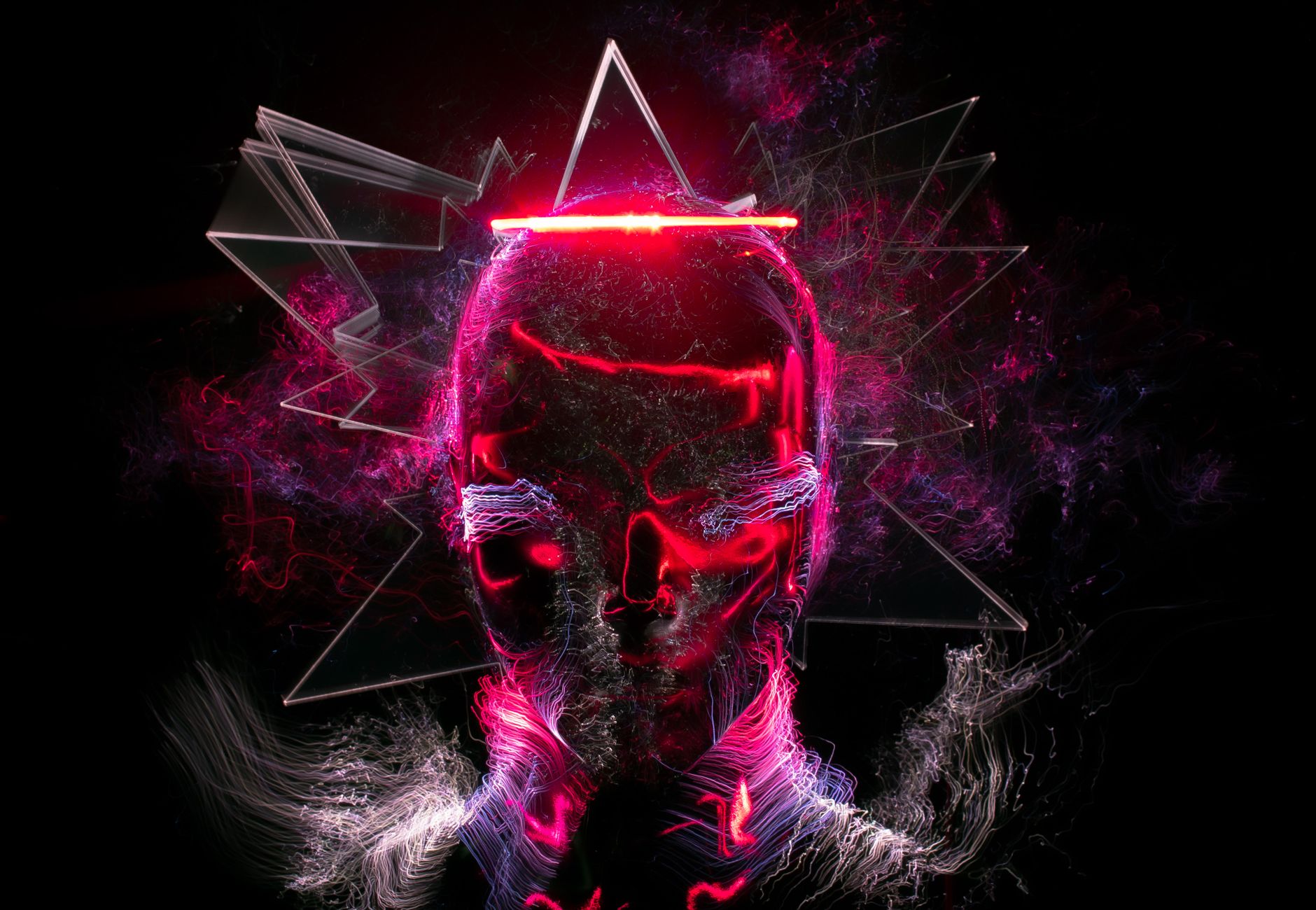 Photo by Merlin Lightpainting on Pexels.
Keith Frankish, the philosopher most associated with contemporary illusionism, makes a sharp distinction between what he calls phenomenal consciousness and access consciousness. Access consciousness is real: information becomes globally available, gets reported, influences behavior. Phenomenal consciousness, the raw subjective "what it's like" quality, is where illusionism gets provocative. Frankish argues that we are systematically mistaken about our own inner states. We don't actually have rich, intrinsic qualia. We have representations that misrepresent themselves as having properties they don't possess.
The brain, on this view, generates a kind of user illusion. Much like a desktop interface hides the underlying machine code behind icons and folders, consciousness hides its own computational substrate behind a vivid phenomenal story.
Why would anyone accept this? The pressure comes from the explanatory gap itself. If you hold that qualia are real and intrinsic, you face the hard problem: no account of physical processing seems to touch the felt quality of experience. Illusionism dissolves the hard problem by denying its premise. There is no ineffable residue left over after you explain the functional and representational facts, because the ineffable residue was a representational artifact all along.
This is not eliminativism in the blunt sense. Illusionists don't say consciousness doesn't exist. They say we're wrong about its nature, the way people were wrong about the nature of fire before chemistry explained combustion. The phenomenon is real. Our folk-psychological model of it isn't.
Daniel Dennett spent decades pushing versions of this position (his "heterophenomenology" and multiple drafts model cover similar ground), and the philosophical hostility was fierce. Many philosophers feel that denying qualia is like denying that anyone is home. Thomas Nagel's "what it is like" formulation, Mary's knowledge argument about color, David Chalmers' zombie thought experiments: all of these feel like knockdown objections until you look closely at what they actually assume.
Here's where things get interesting for AI research. If illusionism is true, the hard problem vanishes, and consciousness becomes, in principle, fully explicable in functional and representational terms. A system that models its own states, generates higher-order representations, and misrepresents those representations as having phenomenal properties would be, in the relevant sense, conscious. Or at minimum, it would meet the criteria for the kind of consciousness humans actually have.
Consider what this implies for large language models. Current systems do maintain something like self-representations: they track context, generate claims about their own uncertainty, produce outputs that reference internal states. Whether any of this constitutes the misrepresentation that illusionism requires is genuinely open. Frankish himself is cautious here. The specific character of human illusory qualia may depend on evolutionary history, embodiment, and the particular architecture of mammalian perception in ways that don't transfer.
Still, the theoretical implication is worth sitting with. If the hard problem is dissolved rather than solved, the gap between human and machine consciousness narrows considerably. You no longer need to explain how computation gives rise to something categorically different from computation. You need to explain how a system comes to generate systematically misleading self-models. That feels like a more tractable engineering and cognitive science question.
Opponents push back hard on one particular point: illusionism seems to misplace the explanatory burden. Even if my representation of redness misrepresents its own nature, there's still something it's like to have that representation. The illusion itself requires an experiencer. This objection has force, and illusionists haven't fully neutralized it.
What illusionism does well is force precision. When someone claims that AI cannot be conscious because it lacks qualia, the illusionist asks: what exactly are qualia, and how confident are you that your introspective reports about them are accurate? That question alone reframes the whole debate.
Philosophy of mind has a habit of treating the intuitive obvious as theoretically given. Illusionism is a useful irritant. Whether or not it's right, it demands that anyone theorizing about machine minds say clearly what they think consciousness actually is, before confidently ruling out who has it.
Get Triarchy of Sentience in your inbox
New posts delivered directly. No spam.
No spam. Unsubscribe anytime.