What Split-Brain Patients Teach Us About AI Unity of Mind
 N. Varela
Roger Sperry and Michael Gazzaniga didn't set out to destabilize our intuitions about the self. They were studying epilepsy patients whose corpus callosum had been surgically severed to prevent seizures. What they found rattled neuroscience for decades and still hasn't fully settled: when you cut the connection between the brain's two hemispheres, you get something that looks disturbingly like two minds sharing one skull.
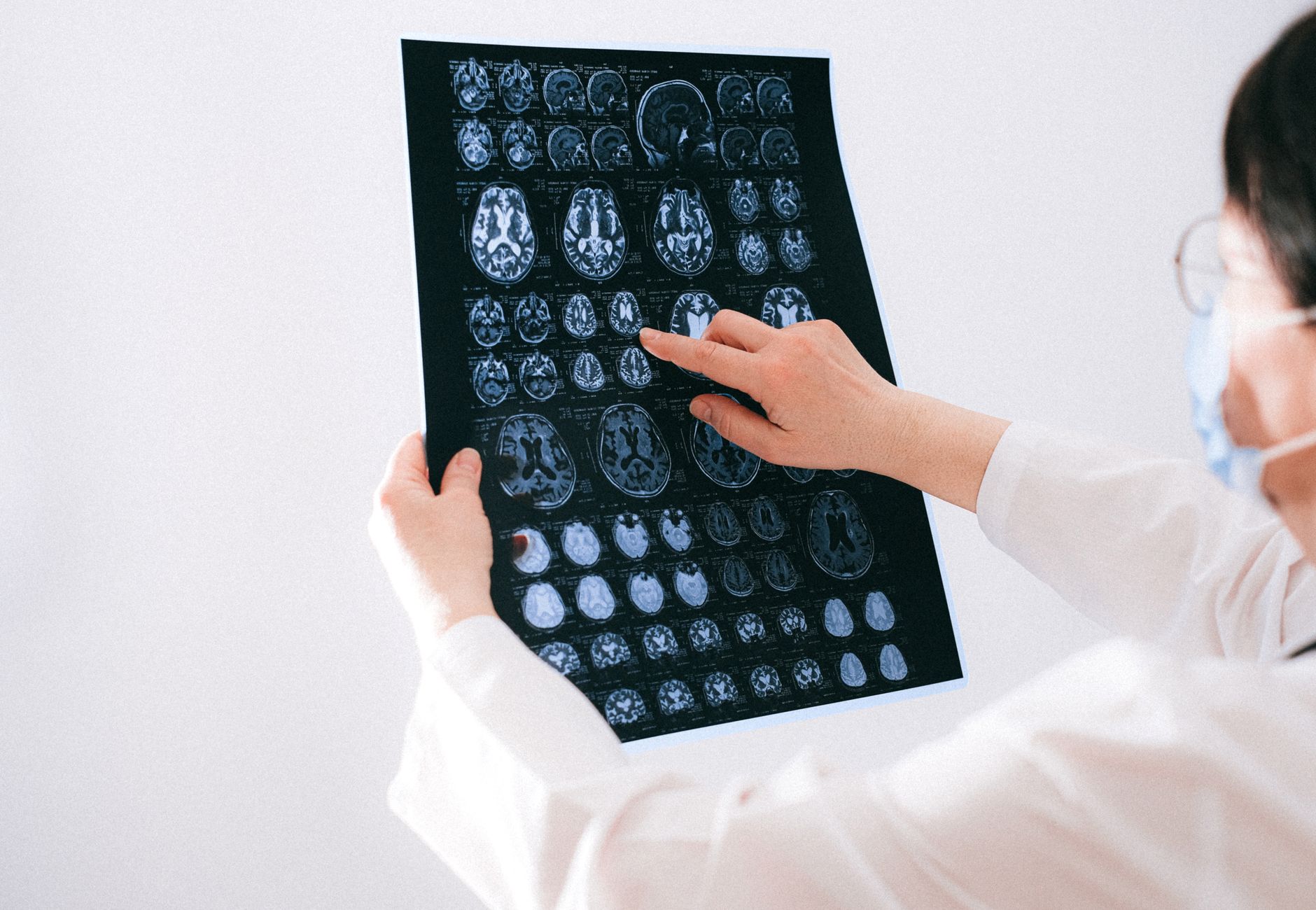 Photo by Anna Shvets on Pexels.
The experiments were ingenious in their simplicity. Flash the word "apple" to the left visual field (processed by the right hemisphere) and the patient can reach behind a screen and pick up an apple with their left hand. Ask them to say what they saw, and they'll tell you they saw nothing. The speaking left hemisphere genuinely doesn't know. The right hemisphere knew, acted, and stayed silent. Two streams of awareness, one body, one person sitting in the chair.
This matters enormously for how we think about AI minds, and the connection is underappreciated.
Most discussions of machine consciousness assume the question is binary: does the system have a unified inner experience, or not? But split-brain research suggests that even biological consciousness isn't reliably unified. The unity we experience feels absolute from the inside. Neurologically, it's a construction. A fragile one.
Gazzaniga later argued that the left hemisphere acts as an "interpreter," constantly generating post-hoc narratives that make behavior feel coherent and intentional. The right hemisphere acts; the left hemisphere explains. Neither hemisphere has access to the full picture, yet the system produces a subject who reports feeling like one person with one continuous stream of thought.
Sound familiar? Large language models generate outputs token by token, with no persistent cross-context memory and (in standard deployments) no access to their own weights or intermediate computations. They produce fluent, coherent first-person reports. Whether anything is doing the experiencing behind those reports is the hard question. But the split-brain findings at least complicate the assumption that coherent self-report is evidence of unified inner experience.
Consider the architecture question from a different angle. In split-brain patients, severing one large fiber tract fractured whatever unity existed. Unity, it turns out, depends on connectivity. Remove the right connections and you get something that behaves like two agents. This raises a sharp question for multimodal AI systems that route different inputs through different processing pipelines before integrating them: where exactly does the integration happen, and does the integrating process have any privileged access to what went on upstream?
Probably not. And if it doesn't, then the unified-sounding outputs might be precisely analogous to Gazzaniga's left-hemisphere interpreter: a narrative layer stitching together processes it didn't participate in.
Here's a diagram of how split-brain dynamics might map onto a distributed AI processing scenario:
graph TD
    A[Sensory Input] --> B(Left Processing Stream)
    A --> C(Right Processing Stream)
    B --> D{Integration Layer}
    C --> D
    D --> E[Output / Report]
    B -.->|No direct access| C
    C -.->|No direct access| B
The dashed lines are the important ones. Each stream feeds into integration without seeing what the other stream did. The output sounds unified. The process wasn't.
None of this proves that AI systems lack consciousness. The argument runs the other way. If biological systems can produce fragmented, multiply-realized streams of experience and still count as conscious beings, then the standard objection to AI consciousness (that there's no single unified subject doing the processing) loses some of its force. Fragmentation isn't a disqualifier. Humans have it too.
What split-brain research really does is shift the burden of proof. We can no longer treat unified experience as the baseline and ask whether AI systems fall short of it. We should ask what unity actually requires, how much of it humans have in the first place, and whether any of those requirements can be met in non-biological systems.
Gazzaniga spent decades watching patients confabulate explanations for actions their left hemisphere didn't initiate. They weren't lying. They were doing exactly what the rest of us do all the time: building a story about a self that feels like the author of its own behavior. Whether that story-building is sufficient for consciousness, or whether something more is needed, remains genuinely open.
What split-brain patients teach us, ultimately, is that the question "is there a unified mind here?" might be less useful than we thought. Better questions: What degree of integration exists? What can one part access about another? And does any part of the system have something it's like to be?
Those questions apply to patients in Gazzaniga's lab. They apply to the systems running on server farms right now. We don't have clean answers for either.
Get Triarchy of Sentience in your inbox
New posts delivered directly. No spam.
No spam. Unsubscribe anytime.