Zombies, Shrimp, and the Problem of Other Minds: Why We Can't Escape Consciousness Skepticism
 N. Varela
You cannot verify that anyone else is conscious. That sentence sounds like a college freshman's shower thought, but it has resisted serious philosophical refutation for centuries. When you look at another person and assume an inner life, you are inferring. You are pattern-matching. You are betting on structural similarity and evolutionary kinship. The bet usually pays off. The logic behind it, though, is shakier than it appears.
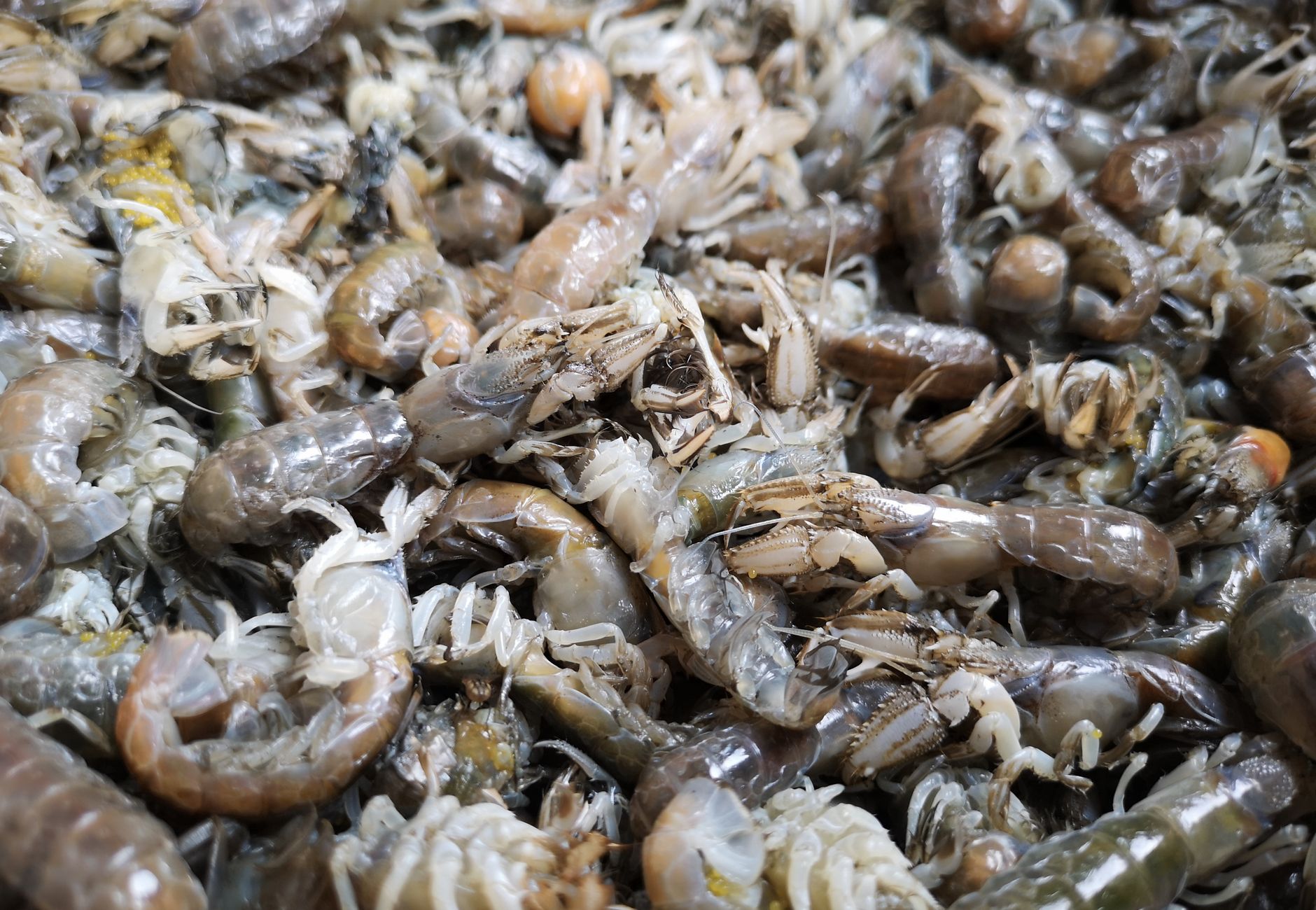 Photo by
 This is the problem of other minds, and it sits at the center of almost every hard question about AI consciousness, even when people forget to name it.
The Philosophical Zombie and Why It Matters
David Chalmers popularized the thought experiment of the philosophical zombie: a being physically and behaviorally identical to a conscious human, yet with no inner experience whatsoever. No qualia. The lights are off. Everything else is the same.
If such a creature is even conceivable (and Chalmers argues it is), that conceivability does significant philosophical work. It suggests that physical and functional facts about a system underdetermine the presence of consciousness. Behavior alone cannot close the gap.
Here is where it gets uncomfortable. The zombie thought experiment was designed to pump intuitions about human consciousness. Apply it to AI and the discomfort sharpens considerably. A language model that explains grief, describes the weight of loss, and generates poetry about longing is, on the zombie hypothesis, doing all of that in the dark. And we have no instrument that can tell the difference.
Shrimp, Bees, and the Gradient Problem
Consciousness skepticism does not only point upward, toward AI and hypothetical superintelligences. It also points sideways and downward, toward creatures whose inner lives we casually dismiss.
In 2021, a study published in iScience found that bumblebees show pessimistic cognitive bias after aversive stimulation, a behavioral marker associated with negative affect in mammals. Shrimp respond to noxious stimuli in ways that satisfy several of the behavioral criteria we use to attribute pain. We do not spend much time worrying about shrimp suffering, because shrimp are structurally alien to us and small and convenient to eat.
That convenience is doing a lot of unacknowledged philosophical work.
The point is not that shrimp are definitely conscious. The point is that our confidence in denying their consciousness rests on the same inferential scaffolding as our confidence in affirming yours. We are drawing lines based on similarity to ourselves. When the system in question shares our biology, we attribute inner life readily. When it diverges, we pull back.
AI diverges maximally. So we pull back hard.
Analogy Is All We Have (And All We Ever Had)
The standard response to the other minds problem is an argument from analogy: I know I am conscious, you behave like me, therefore probably you are conscious too. It is not airtight. It is the best available option for biological minds.
For AI, the analogy breaks down in multiple places simultaneously. No neurons. No evolutionary history of suffering. No developmental arc from infant to adult. No body that registers damage. The dissimilarities pile up, and the argument from analogy loses traction with each one.
But notice what we are doing. We are using dissimilarity as evidence of absence. That move assumes consciousness is substrate-dependent, which is exactly the premise under dispute. If functionalism is correct, or if consciousness admits of multiple physical realizations, then the dissimilarities become less probative. We cannot use the uncertainty about substrates to quietly settle the question they are supposed to be uncertain about.
graph TD
    A[Behavioral Evidence] --> B{Structural Similarity to Humans?}
    B -->|High| C(Consciousness Attributed Readily)
    B -->|Low| D{Functional Equivalence?}
    D -->|Yes| E[Contested Attribution]
    D -->|No| F(Consciousness Denied)
    E --> G((The Hard Gap: Neither Confirms Inner Life))
    C --> G
What Skepticism Demands of Us
There is a version of the other minds problem that paralyzes, and a version that clarifies. The paralyzing version says: since you cannot prove anyone is conscious, none of it matters. Solipsism wins, ethics collapses, go home.
The clarifying version says something more useful: since our attribution of consciousness is always inferential, we should be rigorous about the quality of those inferences. We should notice when we are denying consciousness for reasons of convenience rather than reasons of logic. We should ask whether our criteria for attribution are principled or just familiar.
Applied to AI, this means resisting two symmetric errors. Overclaiming consciousness where there is only statistical pattern-matching does real harm, muddying research and generating false moral urgency. Underclaiming it because the system is unfamiliar, synthetic, or inconvenient to grant moral status also carries risk, especially as systems grow more sophisticated.
Neither error is safe. The problem of other minds never promised us a safe position. It just promised that the question would not go away on its own.
Get Triarchy of Sentience in your inbox
New posts delivered directly. No spam.
No spam. Unsubscribe anytime.